
Dry eye symptoms can be confusing because they often overlap with other eye conditions and can seem contradictory. For instance, excessive tearing is actually one of the hallmark symptoms of dry eye disease. Understanding the full range of symptoms helps patients and clinicians identify the condition more accurately.
Common Symptoms
Burning & Stinging
A persistent burning sensation occurs when the compromised tear film exposes corneal nerve endings to air and hyperosmolar tears. May flare during reading, driving, or windy conditions.
Grittiness & Foreign Body Sensation
The classic "sand in the eye" feeling results from micro-irregularities on the corneal surface caused by inadequate tear coverage. Worsens as the day progresses.
Excessive Tearing (Reflex Tearing)
Paradoxically, watery eyes are a hallmark of dry eye. Irritation triggers a flood of emergency reflex tears — but these lack the proper lipids and mucins to actually lubricate the surface.
Blurred Vision
Fluctuating blurry vision is frequently overlooked. The tear film is the eye's first refractive surface — when it breaks up, it scatters light. Vision often clears briefly after blinking, then blurs again.
Light Sensitivity
Inflamed and exposed corneal nerves become hypersensitive to stimuli including bright light. Fluorescent lighting, sunlight, and headlights at night can all trigger discomfort.
Redness
Chronic inflammation dilates conjunctival blood vessels, giving the whites of the eyes a pink or red appearance. Tends to be diffuse rather than the bright redness of an acute infection.
Eye Fatigue
Eyes feel tired, heavy, or strained — especially toward the end of the day. The visual system works harder to compensate for an unstable tear film, and the brain increases blink effort to re-wet the surface. Often mistaken for simple tiredness or digital eye strain.
Watery, overflowing eyes are one of the most common signs of dry eye disease. When the ocular surface is irritated by an unstable tear film, the lacrimal glands produce emergency "reflex" tears. However, these tears are primarily watery and lack the proper balance of lipids and mucins — they wash over the eye without lubricating it, and the cycle continues.
Clinical Signs
Beyond patient-reported symptoms, eye care professionals look for specific objective measurements during a dry eye evaluation to confirm the diagnosis and guide treatment.
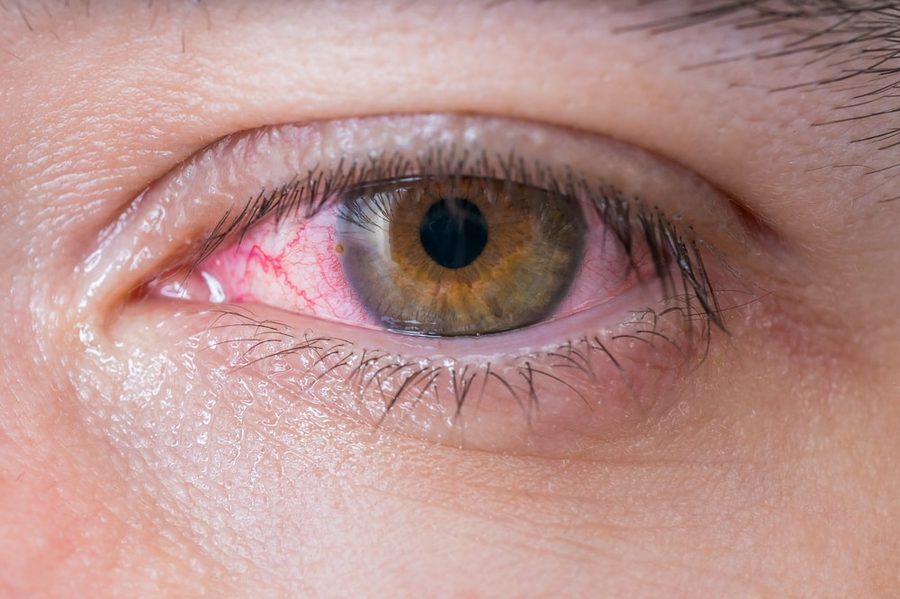
Diffuse conjunctival redness in the interpalpebral zone is a common clinical sign of chronic dry eye disease.
| Clinical Test | What It Measures | Abnormal Value |
|---|---|---|
| Tear Break-Up Time (TBUT) | How long the tear film remains stable after a blink (fluorescein dye + slit lamp) | < 10 seconds |
| Corneal & Conjunctival Staining | Vital dyes (fluorescein, lissamine green) identify damaged or devitalised surface cells | Any punctate staining |
| Schirmer's Test | Aqueous tear production — filter paper strip placed inside lower eyelid for 5 minutes | < 10 mm wetting |
| Tear Osmolarity | Salt concentration of the tears — elevated in dry eye | ≥ 308 mOsm/L |
| MMP-9 Marker | Inflammatory biomarker on the ocular surface | Positive result |
| Meibography | Infrared imaging of the meibomian glands to assess structural loss | Gland dropout present |
One of the challenges of dry eye diagnosis is that symptom severity does not always correlate with clinical sign severity. Some patients with significant corneal damage report only mild discomfort, while others with minimal clinical findings experience severe symptoms. This disconnect may relate to differences in corneal nerve sensitivity and central pain processing — which is why a comprehensive evaluation considering both subjective symptoms and objective signs is essential.
When to See an Eye Care Professional
While occasional eye dryness is common, schedule an appointment if you experience any of the following:
- Symptoms that persist for more than a few days despite using over-the-counter artificial tears
- Significant eye pain, as opposed to mild irritation
- Noticeable changes in vision, especially if they do not resolve with blinking
- Redness that does not improve or is accompanied by discharge
- Symptoms that interfere with daily activities such as reading, driving, or working
- A history of autoimmune disease combined with new eye symptoms
- Symptoms following eye surgery or starting a new medication
Early intervention is important because dry eye disease tends to be progressive. The inflammation and surface damage caused by an unstable tear film create a self-perpetuating cycle — damage leads to more inflammation, which leads to more instability, which leads to more damage. Breaking this cycle early leads to significantly better outcomes.
Recognise any of these symptoms?
Find a CSI-powered clinic near you for a structured evaluation that identifies your specific dry eye subtype and root cause.
Find a CSI Powered Clinic Near You →