What Is Dry Eye Disease?
Dry eye disease (DED), also known as keratoconjunctivitis sicca, is a multifactorial condition of the ocular surface. In practical terms, it occurs when your eyes either don't produce enough tears, or when the tears that are produced evaporate too quickly or are of poor quality — leading to inflammation, surface damage, and a range of uncomfortable symptoms.
"A multifactorial disease of the ocular surface characterized by a loss of homeostasis of the tear film, and accompanied by ocular symptoms, in which tear film instability and hyperosmolarity, ocular surface inflammation and damage, and neurosensory abnormalities play etiological roles."
This modern definition reflects a key insight: dry eye is not simply a matter of "not enough tears." It is a complex, self-perpetuating cycle of inflammation and surface damage that requires a structured, evidence-based approach to diagnose and treat effectively.
The Tear Film: Three Essential Layers
A healthy tear film is a precisely balanced structure — approximately 3 micrometers thick — that protects, nourishes, and lubricates the ocular surface. It is composed of three interdependent layers, each produced by different glands and structures around the eye.
Lipid (Oil) Layer — The Outermost Seal
Produced by the meibomian glands in the eyelids (30–40 in the upper lid, 20–30 in the lower). Prevents the aqueous layer from evaporating. When these glands become blocked — meibomian gland dysfunction (MGD) — tear evaporation accelerates dramatically. MGD is the leading cause of dry eye and is present in the majority of cases.
Aqueous (Water) Layer — The Middle Core
Makes up ~90% of the tear film's thickness. Produced by the lacrimal glands. Contains water, electrolytes, proteins, antibodies, and growth factors. Washes away debris, delivers oxygen to the cornea, and provides antimicrobial defence. Deficiency leads to aqueous-deficient dry eye, commonly associated with autoimmune conditions like Sjögren's syndrome.
Mucin Layer — The Inner Anchor
Produced by goblet cells in the conjunctiva. Acts as a bridge between the hydrophobic corneal surface and the aqueous tears above it, allowing the tear film to spread evenly with each blink. Without adequate mucin, the tear film breaks up rapidly — creating dry spots even when tear volume is sufficient.
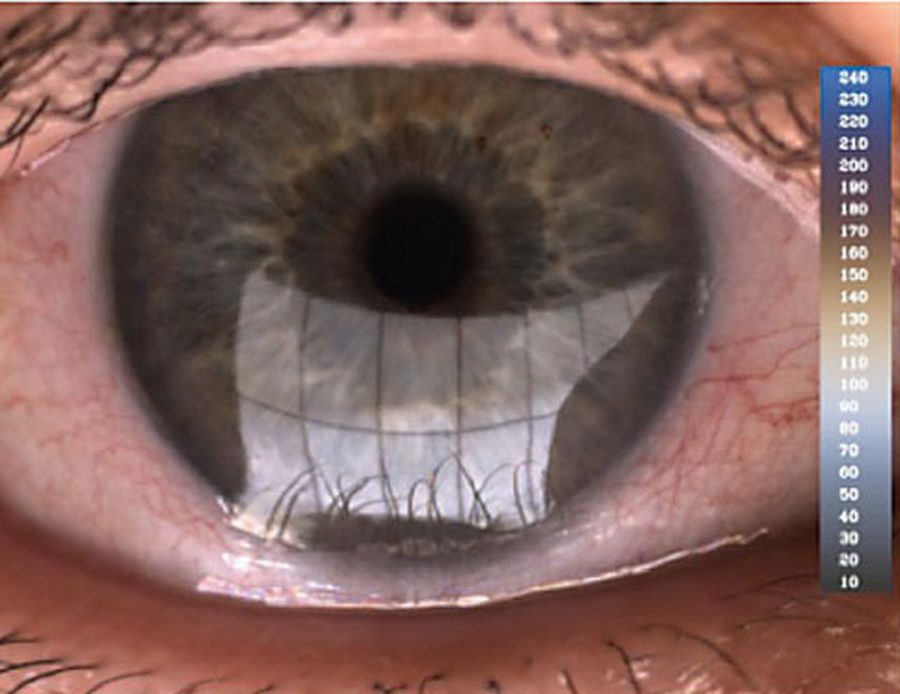
Advanced diagnostic imaging allows clinicians to assess the health of the meibomian glands and tear film stability objectively.
Types of Dry Eye Disease
Aqueous-Deficient Dry Eye
The lacrimal glands fail to produce sufficient aqueous tears. Can be Sjögren's syndrome-related (autoimmune) or non-Sjögren's (age-related decline, medications). Often presents with very low Schirmer's test scores and severe symptoms.
Evaporative Dry Eye
By far the more common type. The tear film evaporates too rapidly — most often due to MGD. Other causes include incomplete blinking, reduced blink rate from screen use, contact lens wear, and environmental factors.
Mixed Dry Eye
In clinical practice, most patients present with a combination of both aqueous-deficient and evaporative mechanisms. Modern treatment approaches aim to address both components simultaneously for the best outcomes.
In clinical practice, most patients present with a combination of both mechanisms — which is why a structured, comprehensive evaluation is essential before starting treatment.
Prevalence & Impact
The impact on quality of life should not be underestimated. Research has shown that the burden of moderate-to-severe dry eye on daily functioning is comparable to that of moderate angina. Patients report difficulty with reading, driving at night, working on computers, and enjoying outdoor activities.
Despite its prevalence, dry eye disease remains widely underdiagnosed. Many patients attribute their symptoms to allergies, fatigue, or normal aging — and delay seeking care for years. Early diagnosis and treatment are essential to prevent the self-perpetuating cycle of inflammation and damage that characterises progressive dry eye disease.
Think you might have dry eye disease?
Find a CSI-powered clinic near you for a structured, evidence-based evaluation — and a clear answer.
Find a CSI Powered Clinic Near You →Not Sure If You Have Dry Eye?
Take the 2-Minute Dry Eye Assessment
Answer a few quick questions to understand your symptoms and get personalised guidance.
Start the Assessment →